Dung beetles can use the Milky Way to roll in a straight line.
Why this sounds fake
A galaxy feels far too faint and huge to be a practical compass for a small insect.
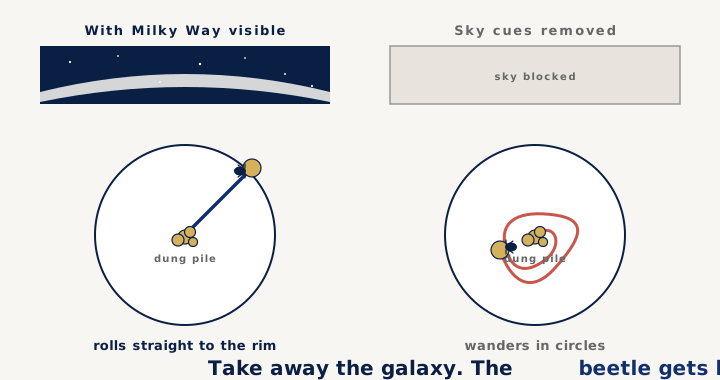
The Milky Way feels like a human-scale navigation cue, the kind of thing sailors, astronomers, or photographers notice. Nocturnal dung beetles use it too. Experiments with Scarabaeus satyrus showed that on moonless nights, the beetles could keep rolling straight when the Milky Way was visible, and lost that directional performance when the sky cues were blocked or altered. They are not reading constellations. They use the broad band of galactic light as a compass so they can escape the dung pile quickly with their prize. A tiny insect is using the galaxy as infrastructure.
With the Milky Way visible the beetle rolls dead straight; cover the sky and the same beetle loops in circles.
1 discovery explored