Some planets drift through space without orbiting a star.
Why this sounds fake
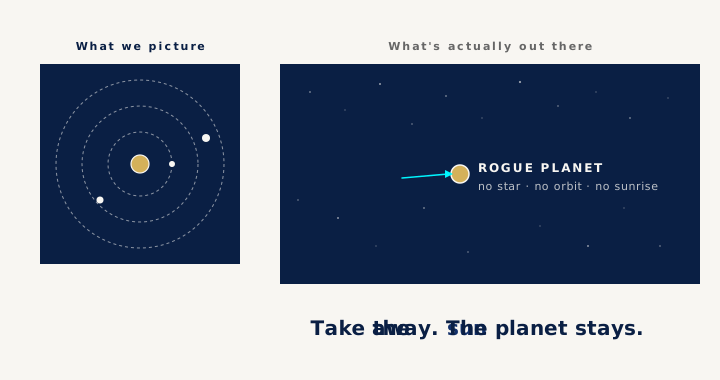
Planets are usually taught as members of solar systems, so a planet without a star feels category-breaking.
Planet is one of those words that seems to imply a star. But astronomers have found and studied free-floating, or rogue, planets that are not bound to a host star. NASA describes rogue planets as worlds that wander through interstellar space alone, likely after being ejected from young planetary systems or forming in unusual ways. They are planets without a sunrise, without a home star, and without the tidy solar-system picture most of us learn first. The fact works because it breaks the most basic classroom diagram: planets do not always come in neat star-centered families.
There is no sun in this picture — just a planet, drifting through interstellar space with nothing to orbit.
1 discovery explored