The narwhal is a whale, and its 'horn' is actually a sensitive tooth.
Why this sounds fake
Narwhals are pictured as unicorn-like creatures with a horn, so people rarely picture a whale carrying a long, living tooth full of nerves.
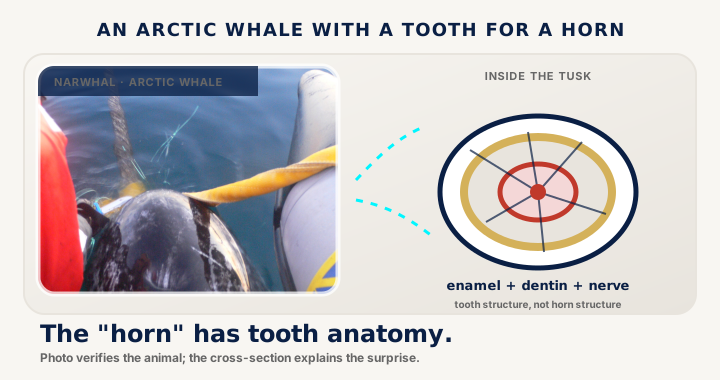
The narwhal is an Arctic whale, and its famous spiral 'horn' looks like something from a fantasy bestiary, so it is easy to file it with antlers or rhino horns. Biologically, it is an elongated canine tooth, usually projecting from the upper left jaw of males. Smithsonian-linked research has also mapped sensory tissues and nerve pathways in the tusk, supporting the idea that it can respond to environmental stimuli. The exact social roles of tusks are still studied, so the safest surprise is anatomical: the famous spiral is a tooth with sensory capacity. The unicorn image hides something stranger than a whale carrying a giant tooth.
The 'unicorn horn' belongs to a whale - and it has the layered anatomy of a tooth.
1 discovery explored