Honeybees can learn to recognize human face images.
Why this sounds fake
Face recognition feels like a specialized big-brain task, not something an insect could learn from flat images.
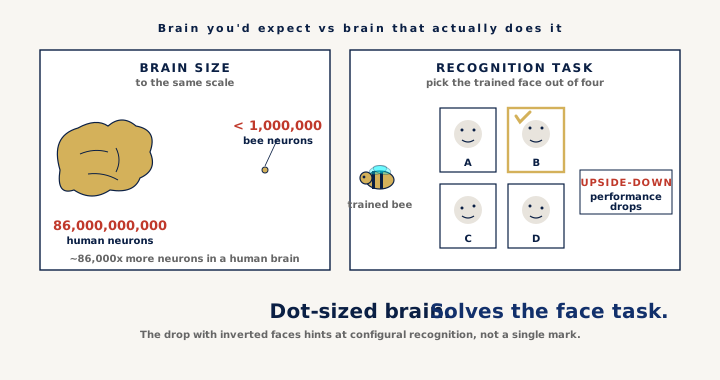
Face recognition feels like it should require a big mammal brain. Honeybees have brains with fewer than a million neurons, yet experiments trained individual bees to choose target human face images over similar distractors. Their performance dropped when the images were turned upside down, which suggests they were using the arrangement of features, not just one simple mark. The fact is not that bees know who you are in the street. It is stranger and more precise: a tiny insect brain can solve a visual pattern task we mentally reserve for much larger brains.
A brain ~86,000 times smaller than ours still solves a configural human-face recognition task.
1 discovery explored