Some moths can remember what they learned as caterpillars.
Why this sounds fake
Metamorphosis looks like the animal is rebuilt from scratch, so memories seem like they should be erased.
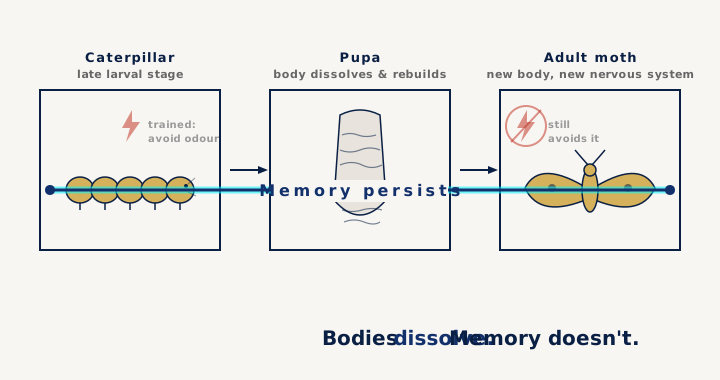
Metamorphosis looks like the ultimate reset button. A caterpillar changes body plan, nervous system, mouthparts, and behavior inside a pupa. In tobacco hornworm experiments, late-stage caterpillars were trained to avoid an odor after it was paired with a mild shock. After becoming adult moths, they still avoided that odor. The result does not mean every caterpillar memory survives, and timing matters: memories formed late in larval development were the ones that persisted. That limitation makes the fact stronger, not weaker. Some information can cross a transformation that looks, from the outside, like biological demolition.
Memory survived a total body rebuild — moths still avoid the smell that shocked them as caterpillars.
1 discovery explored